

The Everest region of Nepal is one of the most iconic trekking destinations in the world. Home to the highest mountain on Earth, Mount Everest, this spectacular Himalayan landscape attracts thousands of trekkers every year. Whether you dream of standing at the foot of Everest or exploring remote mountain valleys, the region offers unforgettable experiences for every type of traveler.
Among all trekking adventures in Nepal, the Everest Base Camp trekking route remains the most famous. However, the Everest region is much more than a single trail. There are numerous Everest region trekking options that cater to different fitness levels, schedules, and adventure preferences.
This guide explores the classic Everest Base Camp route while introducing alternative trekking opportunities that allow visitors to experience the beauty, culture, and grandeur of the Khumbu region.
Introduction to the Everest Region
Located in northeastern Nepal, the Everest region, also known as the Khumbu region, is characterized by towering snow-capped peaks, ancient monasteries, Sherpa villages, glacial rivers, and rugged mountain landscapes. The area falls within the protected boundaries of Sagarmatha National Park, a UNESCO World Heritage Site renowned for its unique biodiversity and breathtaking scenery.
Trekkers visiting the Everest region encounter spectacular views of Everest, Lhotse, Nuptse, Ama Dablam, Thamserku, Cho Oyu, and many other Himalayan giants. Beyond the mountains, the region offers rich cultural experiences through interactions with the Sherpa community, known worldwide for their mountaineering expertise and warm hospitality.
Understanding the Everest Base Camp Trekking Route
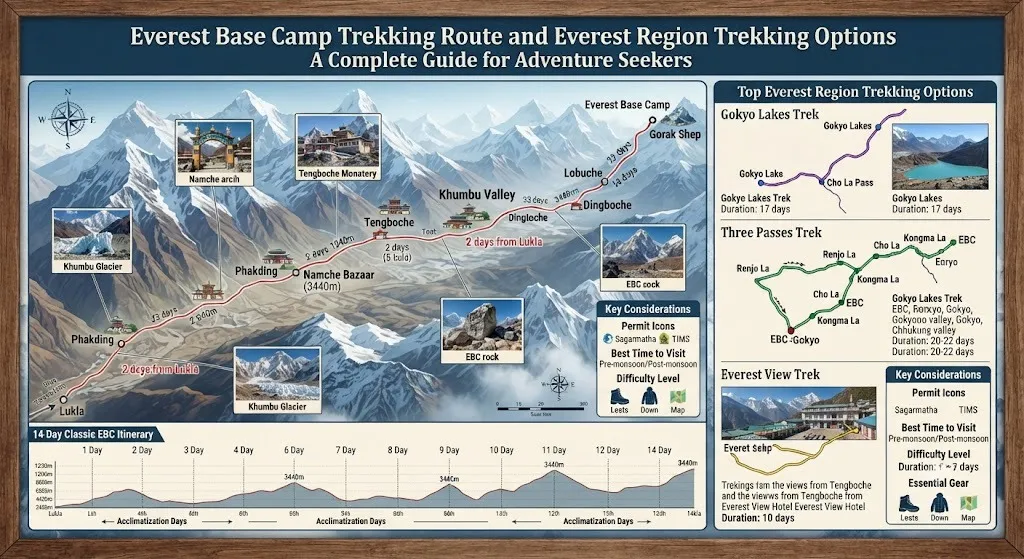
The Everest Base Camp trekking route is a legendary journey that takes travelers to the base of Mount Everest at an altitude of 5,364 meters. The trek combines stunning natural beauty, cultural immersion, and personal achievement.
Starting Point: Lukla
Most Everest treks begin with a scenic flight from Kathmandu to Lukla. This small mountain town serves as the gateway to the Khumbu region. The short but thrilling flight provides spectacular aerial views of the Himalayas.
Trek from Lukla to Phakding
After arriving in Lukla, trekkers begin their journey with a relatively easy walk to Phakding. The trail passes through traditional villages, suspension bridges, and lush forests alongside the Dudh Koshi River.
Phakding to Namche Bazaar
The next major destination is Namche Bazaar, the commercial center of the Everest region. This vibrant Sherpa town is surrounded by towering peaks and serves as a crucial acclimatization stop.
Trekkers often spend an extra day in Namche Bazaar to adjust to the increasing altitude while exploring local markets, museums, and viewpoints.
Namche Bazaar to Tengboche
The route continues through beautiful rhododendron forests and mountain trails to Tengboche. This village is famous for the historic Tengboche Monastery, one of the most important Buddhist monasteries in Nepal.
The panoramic views of Everest, Ama Dablam, and surrounding peaks from Tengboche are truly unforgettable.
Tengboche to Dingboche
The trail gradually ascends into alpine terrain as trekkers make their way to Dingboche. This village provides another important acclimatization stop before heading to higher elevations.
Dingboche to Lobuche
As the landscape becomes increasingly rugged, trekkers continue toward Lobuche. Along the route, memorial monuments honor climbers who lost their lives on Everest expeditions, adding a sense of reverence to the journey.
Lobuche to Everest Base Camp
One of the most exciting days on the Everest Base Camp trekking route involves trekking through Gorakshep before finally reaching Everest Base Camp.
Standing at the base of the world’s tallest mountain is an emotional and rewarding experience. Surrounded by glaciers and towering Himalayan peaks, trekkers gain a deeper appreciation for the challenges faced by Everest climbers.
Kala Patthar Viewpoint
Although Everest Base Camp itself offers limited views of the summit, Kala Patthar provides the best panoramic perspective of Mount Everest. Most trekkers hike to this viewpoint either at sunrise or sunset for spectacular photographs.
Highlights of the Everest Base Camp Trekking Route
Stunning Mountain Views
The trek offers close-up views of Everest and numerous surrounding peaks throughout the journey.
Sherpa Culture
Visitors experience traditional Sherpa lifestyles, Buddhist traditions, prayer flags, monasteries, and centuries-old customs.
Sagarmatha National Park
The trail passes through one of Nepal’s most beautiful protected areas, home to rare wildlife and diverse ecosystems.
Personal Achievement
Completing the Everest Base Camp trek is considered a significant accomplishment for outdoor enthusiasts worldwide.
Popular Everest Region Trekking Options
While the Everest Base Camp trek is the most famous route, there are several alternative Everest region trekking options that offer unique experiences.
Everest Base Camp Trek with Helicopter Return
This increasingly popular option allows trekkers to walk to Everest Base Camp and then return to Kathmandu by helicopter.
Benefits include:
- Reduced trekking duration
- Spectacular aerial mountain views
- Comfortable return journey
- Ideal for travelers with limited time
The helicopter flight provides breathtaking perspectives of glaciers, valleys, and Himalayan peaks.
Gokyo Lakes Trek
The Gokyo Lakes Trek is one of the most beautiful alternatives in the Everest region. This route leads trekkers to a series of turquoise glacial lakes surrounded by snow-covered mountains.
Highlights include:
- Pristine alpine lakes
- Fewer crowds
- Gokyo Ri viewpoint
- Magnificent Everest panorama
Many experienced trekkers consider the view from Gokyo Ri even more impressive than Kala Patthar.
Everest Three Passes Trek
For adventure seekers looking for a greater challenge, the Everest Three Passes Trek is among the most demanding Everest region trekking options.
The trek crosses:
- Kongma La Pass
- Cho La Pass
- Renjo La Pass
This circuit provides extensive exploration of the Khumbu region while offering incredible mountain scenery and a true wilderness experience.
Everest Panorama Trek
Not everyone wishes to trek to Everest Base Camp. The Everest Panorama Trek offers a shorter alternative while still showcasing stunning Himalayan views.
This trek typically reaches Namche Bazaar and Tengboche before returning to Lukla.
Benefits include:
- Shorter duration
- Lower altitude
- Suitable for beginners
- Excellent mountain views
Gokyo and Everest Base Camp Combined Trek
This extended adventure combines two of the region’s most spectacular destinations.
Trekkers visit:
- Everest Base Camp
- Gokyo Lakes
- Cho La Pass
- Kala Patthar
This route delivers a comprehensive Everest experience while showcasing diverse landscapes and viewpoints.
Luxury Everest Trekking Experiences
Luxury trekking has become increasingly popular in the Everest region. Premium lodges and personalized services allow travelers to enjoy Himalayan adventures with enhanced comfort.
Luxury treks often include:
- High-end accommodations
- Professional guides
- Private transportation
- Helicopter services
- Gourmet meals
These packages make the Everest region accessible to travelers seeking a more comfortable trekking experience.
Best Time for Everest Region Trekking
Choosing the right season significantly impacts trekking conditions.
Spring (March to May)
Spring is one of the best times to explore the Everest Base Camp trekking route.
Advantages include:
- Mild temperatures
- Clear mountain views
- Blooming rhododendrons
- Active climbing season
Autumn (September to November)
Autumn offers stable weather and exceptional visibility.
Benefits include:
- Dry conditions
- Crisp mountain views
- Comfortable temperatures
- Excellent trekking conditions
Winter (December to February)
Winter trekking is possible but significantly colder. The trails are quieter, offering solitude and peaceful mountain landscapes.
Monsoon (June to August)
Heavy rainfall can affect visibility and trail conditions, making this the least popular trekking season.
Physical Preparation for Everest Treks
Regardless of which Everest region trekking options you choose, physical preparation is essential.
Recommended training includes:
- Cardiovascular exercises
- Hiking practice
- Strength training
- Endurance workouts
- Altitude awareness education
A well-prepared trekker enjoys a safer and more rewarding experience.
Essential Packing List
Proper equipment is crucial for comfort and safety.
Important items include:
- Waterproof jacket
- Down jacket
- Hiking boots
- Trekking poles
- Sleeping bag
- Thermal clothing
- Sunglasses
- Water purification tablets
- First aid kit
Layering clothing helps manage rapidly changing mountain weather.
Why Choose the Everest Region?
Few destinations on Earth offer the combination of natural beauty, cultural richness, and adventure found in the Everest region.
Visitors can experience:
- The world’s highest mountain
- Ancient Buddhist culture
- Spectacular Himalayan landscapes
- Challenging trekking routes
- Friendly Sherpa hospitality
- Unforgettable personal achievements
Whether trekking to Everest Base Camp or exploring alternative routes, every journey leaves lasting memories.
Conclusion
The Everest Base Camp trekking route remains one of the world’s most iconic adventures, attracting trekkers from every corner of the globe. However, the region offers much more than a single trail. From the scenic Gokyo Lakes Trek to the demanding Three Passes Trek and luxury helicopter-assisted journeys, the variety of Everest region trekking options ensures that every traveler can find a route that matches their interests and abilities.
No matter which trek you choose, the Everest region rewards visitors with extraordinary mountain scenery, rich cultural encounters, and the satisfaction of exploring one of the most remarkable landscapes on Earth. For anyone seeking a life-changing Himalayan adventure, the Everest region stands as a destination unlike any other.